How Much Does a Charter Flight Cost?
Private jet charter flights cost between $2,200 and $18,500 per billable flight hour depending on cabin size, airframe range, and passenger payload capacity. Turboprops bill from $2,200 hourly, light business jets range from $3,800 to $4,800, midsize cabins average $5,200 to $6,800, and ultra-long-range heavy jets command $11,500 to $18,500 per flight hour.
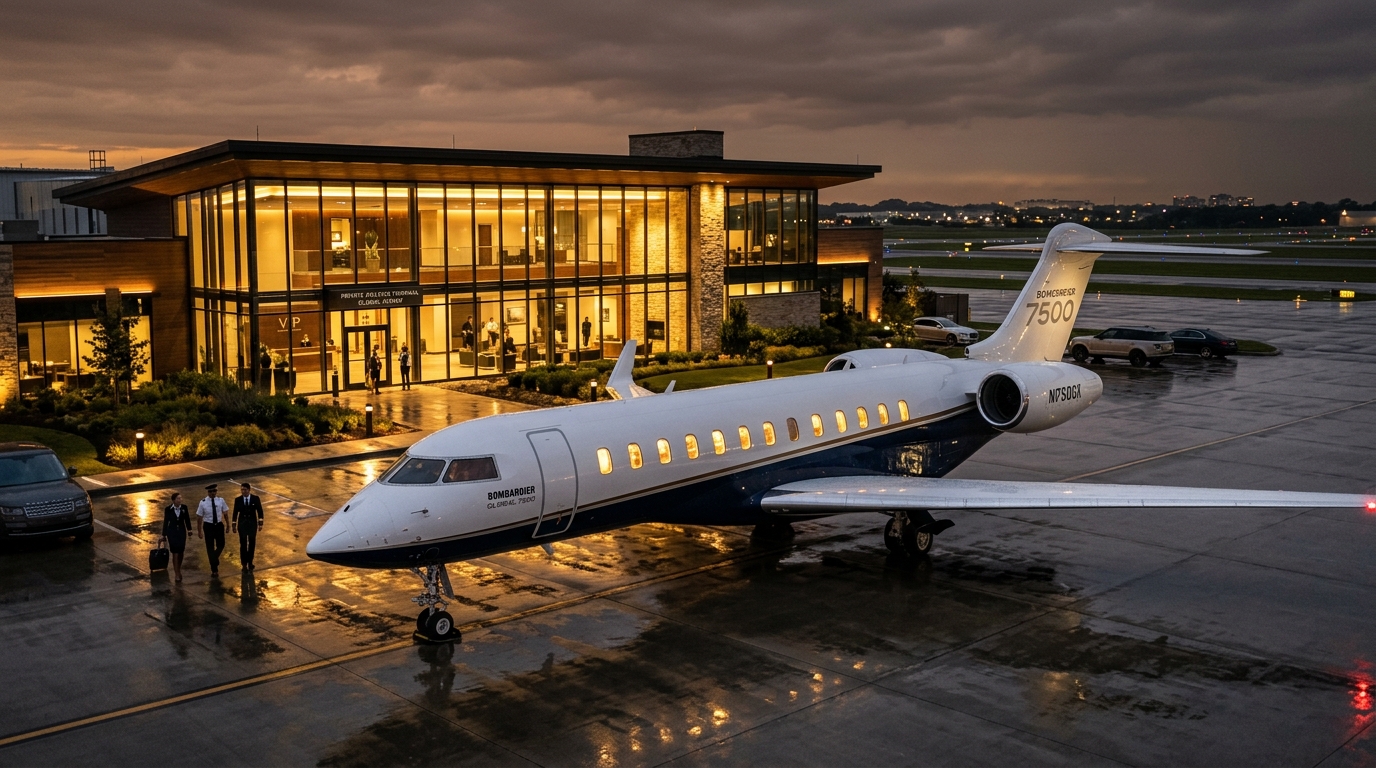
Air charter pricing operates on a whole-aircraft rental structure rather than individual commercial airline ticketing. Passengers acquire dedicated access to the entire pressurized cabin, flight crew, and cargo hold for their selected itinerary.
Understanding hourly aircraft rates allows travelers to calculate realistic travel budgets across high-demand city corridors before signing broker charter contracts.
Hourly Charter Rates by Aircraft Category
Hourly charter rates reflect the direct operating expenses of certified FAA Part 135 aircraft, including jet-A fuel burn, scheduled engine reserves, avionics maintenance, and cockpit flight crew salaries. Larger cabin airframes incur higher fuel consumption and landing tariffs, creating tiered hourly pricing brackets across aircraft classifications.
| Aircraft Category | Passenger Capacity | Average Hourly Rate | Representative Models |
|---|---|---|---|
| Turboprop Aircraft | 4 to 8 Passengers | $2,200 - $3,200 / hr | King Air 350, Pilatus PC-12 |
| Light Business Jet | 6 to 8 Passengers | $3,800 - $4,800 / hr | Embraer Phenom 300, Citation CJ4 |
| Midsize Jet | 7 to 9 Passengers | $5,200 - $6,800 / hr | Hawker 900XP, Citation XLS+ |
| Super Midsize Jet | 8 to 10 Passengers | $6,800 - $8,900 / hr | Challenger 350, Citation Longitude |
| Heavy Jet | 10 to 14 Passengers | $9,500 - $13,500 / hr | Challenger 605, Falcon 900LX |
| Ultra-Long-Range Jet | 12 to 16 Passengers | $12,500 - $18,500 / hr | Gulfstream G650ER, Global 7500 |
Hourly quotes represent base flight tariffs. Additional statutory fees and airport tariffs are calculated separately during final manifest confirmation.
Understanding Additional Fees and Operational Tariffs
A final charter flight invoice encompasses six mandatory cost categories beyond the base hourly rate. These line items include the 7.5 percent US Federal Excise Tax, domestic passenger segment fees, airport landing fees, fixed base operator ramp handling tariffs, crew overnight per diem allowances, and variable fuel surcharges.
1. Federal Excise Tax (FET)
All domestic flights within the United States or the 225-mile border zone incur a mandatory 7.5 percent Federal Excise Tax billed on the complete charter contract total.
Commercial Part 135 air carriers must collect this tax on all passenger transportation services.
2. Airport Landing and Ramp Fees
Executive airports assess landing tariffs based on certified Maximum Takeoff Weight, while dedicated fixed base operators bill handling tariffs ranging from $150 to $1,800.
Congested metropolitan hubs assess higher ramp tariffs than secondary regional reliever airports.
3. Fuel Surcharges
When retail aviation jet-A prices exceed the baseline rate established in the standard charter agreement, operators apply a variable fuel surcharge per flight hour.
Current jet-A surcharges fluctuate between $400 and $1,200 per flight hour depending on region.
4. Crew Overnight and Per Diem
Itineraries requiring the flight crew to remain overnight away from their primary base incur daily lodging, ground transportation, and meal per diem expenses.
Standard crew overnight allocations average $400 to $800 per night for a two-pilot crew.
Real-World Route Cost Benchmarks
Real-world private jet charter costs reflect total block hours, combining aerodynamic cruise time with taxi, climb, approach, and air traffic vector allowances. Popular domestic corridors demonstrate realistic price spreads across light, midsize, and super-midsize business aircraft categories.
Distance: 949 NM | Flight Time: 2h 27m | Recommended: Midsize Jet
FBOs: Signature TEB to Fontainebleau OPF
Distance: 199 NM | Flight Time: 0h 47m | Recommended: Light Jet
FBOs: Signature VNY to Signature LAS
Distance: 1,894 NM | Flight Time: 4h 30m | Recommended: Super Midsize Jet
FBOs: Fontainebleau OPF to Signature LAS
Distance: 923 NM | Flight Time: 2h 25m | Recommended: Midsize Jet
FBOs: Business Jet Center DAL to Signature LAS
Distance: 2,129 NM | Flight Time: 5h 04m | Recommended: Super Midsize Jet
FBOs: Signature TEB to Signature VNY
Compare additional flight distances and nautical mile calculations across our catalog of over 2,400 verified corridors in the charter routes directory.
Proven Methods to Reduce Private Air Charter Expenses
Private jet flyers reduce total charter expenses by utilizing opportunistic repositioning flights, selecting secondary reliever executive airports, and matching aircraft category strictly to mission distance. Booking empty leg flights yields up to 75 percent savings compared to traditional on-demand round-trip quotes.
Empty Leg Flight Segments
Repositioning empty leg flights offer 50 to 75 percent discounts for flexible flyers willing to book one-way departure windows on short notice.
Review current repositioning opportunities across our real-time empty leg flight board.
Secondary Reliever Airports
Choosing secondary general aviation airports reduces landing fees and avoids slot delay surcharges common at major commercial hubs.
Flying into Fort Lauderdale Executive instead of Miami International saves hundreds in landing fees.
Accurate Airframe Sizing
Selecting the precise airframe category required for passenger headcount and flight distance prevents overpaying for unused cabin volume.
Consult verified aircraft specifications across the certified private jet fleet.
Peak Season Demand Surges, Holiday Surcharges, and Ferry Multipliers
Private aviation charter pricing experiences significant volatility during high-density travel holidays, major international sporting events, and seasonal resort migrations. Flying during peak periods incurs daily flight minimum multipliers, higher repositioning ferry charges, and premium fixed base operator ramp parking tariffs.
During holiday windows like Thanksgiving, Christmas, and Super Bowl weekend, Part 135 operators enforce two-hour daily flight minimums. Short one-hour flight legs are billed at the mandatory two-hour rate.
Seasonal one-way migrations to South Florida in winter or Aspen in ski season create empty repositioning legs, prompting operators to bill round-trip ferry costs to recover positioning flight hours.
| High-Demand Event / Period | Pricing Impact | Recommended Booking Window |
|---|---|---|
| Winter Holidays (Dec 20 - Jan 5) | +25% to +40% hourly surge premiums | 6 to 8 weeks in advance |
| Super Bowl & Formula 1 Weekends | $2,000 - $5,000 ramp parking surcharges | 4 to 6 weeks for airport slot reservations |
| Spring Break Caribbean Travel | +15% to +25% island repositioning tariffs | 3 to 5 weeks in advance |
| Off-Peak Mid-Week Flights | Standard base hourly rates apply | 3 to 7 days for optimal availability |
De-Icing Reserves and Winter Charter Operational Surcharges
Operating private aircraft during sub-freezing winter weather introduces specialized operational costs that cannot be determined prior to departure. Federal aviation safety regulations mandate complete aerodynamic wing de-icing prior to takeoff, with specialized fluid billed post-flight strictly according to gallons sprayed on the ramp.
Fixed base operators apply Type I de-icing fluid to melt accumulated snow and frost, followed by viscous Type IV anti-icing fluid to prevent ice reformation during taxiing.
De-icing costs range from $1,500 to $3,500 for light business jets, while heavy and ultra-long-range jetliners incur de-icing charges between $6,000 and $12,000 during severe winter snowstorms.
Ready for an Exact Charter Flight Cost Quote?
Request transparent Part 135 charter pricing across more than 10,000 certified private aircraft worldwide with zero hidden membership commitments.
Fuel Burn Calculation Models and Jet-A Baseline Benchmarks
Aviation turbine fuel represents the single largest variable operating expense in private jet charter accounting. Part 135 air carriers calculate hourly fuel burns based on aircraft weight, cruise altitude, and engine efficiency, billing variable fuel surcharges when airport Jet-A prices exceed contractual baseline peg rates.
Light jets consume approximately 150 to 200 gallons of Jet-A fuel per flight hour. Midsize jets burn 250 to 350 gallons, while heavy intercontinental jets consume between 450 and 600 gallons hourly.
Charter contracts establish baseline fuel pegs between $4.50 and $6.00 per gallon. If local FBO fuel prices rise above this benchmark, operators bill the exact differential per gallon burned.
Frequently Asked Questions About Charter Costs
How much does it cost to charter a private flight per hour?
Private jet charter costs range from $2,200 to $18,500 per billable flight hour depending on aircraft classification. Turboprops average $2,200 to $3,200, light jets bill between $3,800 and $4,800, midsize aircraft cost $5,200 to $6,800, and ultra-long-range heavy jets command $11,500 to $18,500 per hour.
What fees are included in private jet hourly charter quotes?
A standard on-demand charter quote includes the base aircraft hourly flight rate, aviation turbine fuel surcharges, federal excise tax (7.5 percent in the United States), segment passenger fees, airport landing charges, ramp handling tariffs at the fixed base operator, and crew overnight expenses.
Are private jet charter quotes priced per person or for the entire aircraft?
On-demand private jet charters under FAA Part 135 regulations are billed for the entire aircraft cabin rather than individual passenger seats. A group of seven travelers chartering a midsize jet pays the identical total flight invoice as a solo passenger flying the identical routing.
How much can you save booking empty leg charter flights?
Empty leg charter flights provide discounts between 50 and 75 percent off standard published charter tariffs. These discounted segments occur when an aircraft must reposition unoccupied to return to its home hangar or reposition toward another booked passenger departure.