Can Dogs and Pets Fly In-Cabin on Private Charters?
Private charter flights allow dogs, cats, and companion animals to travel directly inside the main passenger cabin alongside their owners. Unlike commercial airline cargo holds subject to extreme temperatures and crate confinement, pet-friendly Part 135 air charters permit animals of all breeds and sizes to relax freely on cabin carpets and seats.
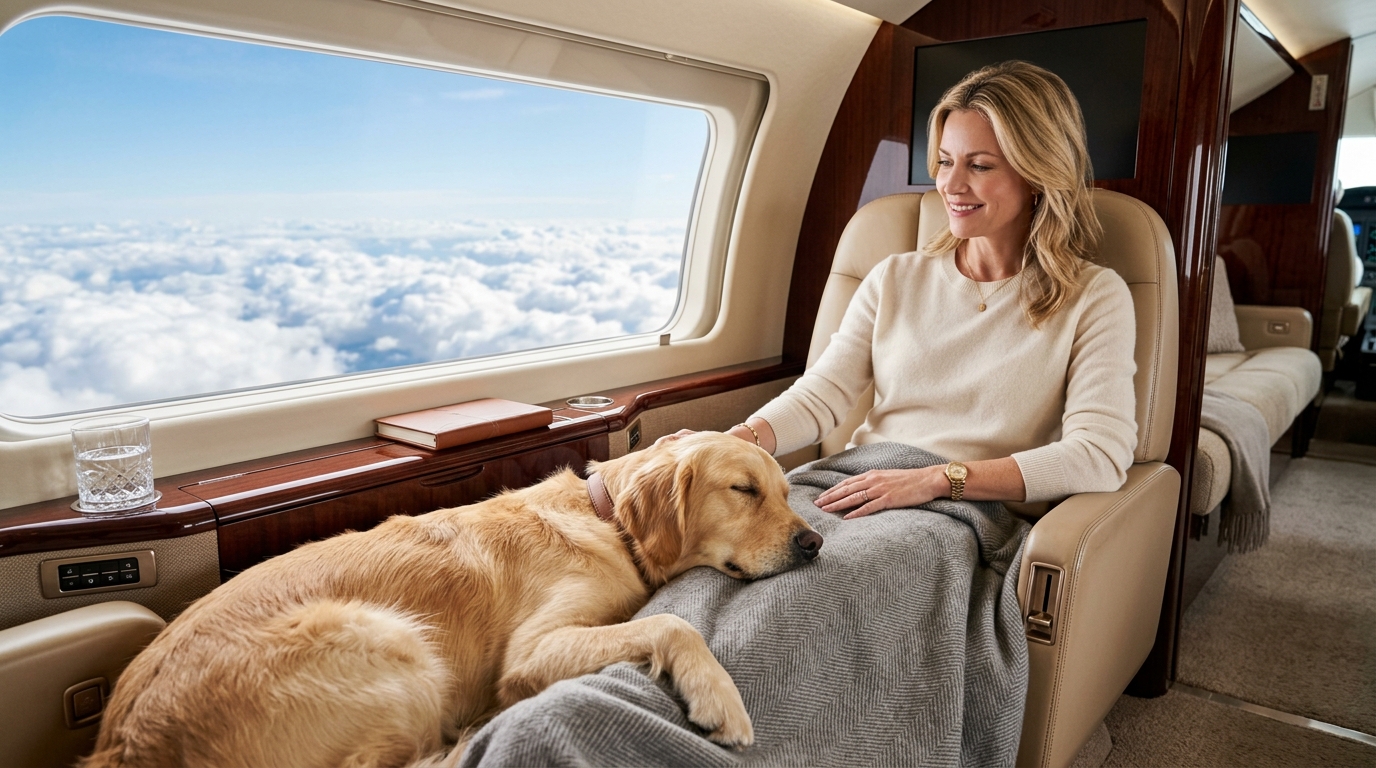
Flying privately eliminates the severe psychological stress, noise trauma, and heatstroke risks associated with commercial airline baggage holds.
Pet owners walk directly onto the aircraft from private fixed base operator lounges, allowing companion animals to board without undergoing traumatic security screening lines.
Required Veterinary Documentation and Health Certificates
A compliant private pet flight requires verified veterinary health paperwork before departure clearance. Domestic flights within the United States require valid rabies immunization records and a signed USDA Interstate Health Certificate. International flights mandate ISO-compliant microchips, titer blood tests, and country-specific pet import permits.
Domestic US Pet Flights
Domestic pet travel requires a licensed veterinarian to issue a Certificate of Veterinary Inspection within 10 to 30 days of wheels-up time.
States like Hawaii require rigorous pre-arrival FAVN rabies antibody testing to bypass strict island quarantine.
International Pet Passports
Flying pets overseas to the UK, Europe, or the Caribbean requires ISO microchips, tapeworm treatments, and government-endorsed health paperwork.
Review international customs clearance rules in our international charter flights guide.
In-Flight Safety and Cabin Preparation for Large Dogs
Ensuring safety during takeoff, turbulence, and landing requires certified canine travel restraints attached to aircraft seat anchors. Operators recommend withholding food four hours prior to departure to prevent motion sickness while maintaining hydration throughout cruising altitudes.
| Flight Phase | Safety Requirement | Recommended Equipment |
|---|---|---|
| Takeoff & Taxi | Restrained to seat clip or placed on floor blanket | Crash-tested restraint leash clipped to cabin seat buckle |
| Cruise Flight | Free to roam cabin with owner supervision | Non-spill water bowl, familiar blanket or bed |
| Descent & Landing | Secured with restraint lead to withstand braking forces | Chew treats to encourage swallowing for ear pressure |
Learn how hourly flight costs are structured across different cabin sizes in the charter flights cost breakdown.
Understanding Pet Detailing Fees and Cleaning Tariffs
While certified Part 135 operators welcome companion animals, standard aircraft lease contracts include post-flight interior detailing provisions. If a pet leaves shedding fur, muddy paw prints, or carpet soiling, operators charge a professional cleaning fee between $250 and $750 to restore executive cabin standards.
Providing protective fleece blankets over leather seating and grooming pets before flight day mitigates post-flight cleaning charges.
Commercial Airline Breed Bans vs Private Jet In-Cabin Freedom
Commercial airlines routinely enforce seasonal temperature embargoes and outright breed prohibitions against brachycephalic dogs and cats due to severe respiratory risks in cargo compartments. Private charter flights permit short-snout breeds directly inside climate-controlled cabins where pressurized airflow and constant owner supervision prevent fatal respiratory distress during flight.
Breeds such as French Bulldogs, English Bulldogs, Pugs, Boston Terriers, and Persian cats suffer from flattened cranial anatomy. In unpressurized or cargo environments, high ambient heat triggers respiratory fatigue.
On an executive jet charter, cabin pressure is maintained at comfortable altitudes of 6,000 to 7,000 feet. Flight crews regulate ambient cabin temperatures to precise degrees specified by pet owners.
| Service Parameter | Commercial Airline Cargo | Part 135 Private Jet Cabin |
|---|---|---|
| Cabin Seating Location | Belly cargo hold under aircraft floor | Beside owner in pressurized main cabin |
| Brachycephalic Breeds | Strictly banned on major commercial carriers | 100% permitted across all certified airframes |
| Terminal Wait Time | 3 to 4 hours in noisy cargo warehouse | 15 minutes in private VIP FBO lounge |
| Sedation Recommendation | Often pressured due to cargo stress | Veterinarians discourage tranquilizers on private flights |
Top Pet-Friendly Private Jet Corridors & Reliever FBOs
These high-demand private charter corridors feature dedicated pet relief lawns, rapid ramp vehicle boarding, and simplified international animal health documentation.
International Pet Clearances: UK DEFRA and EU Pet Passports
Landing companion animals internationally requires authorized entry ports, government veterinary stamps, and ISO microchips. Flying dogs into the United Kingdom aboard private flights requires landing at DEFRA-approved airfields like London Biggin Hill or Farnborough where official Animal and Plant Health Agency inspectors conduct plane-side customs clearance.
Approved UK Pet Ports
Private aircraft carrying pets into Britain must land at certified DEFRA ports, including London Biggin Hill (EGKB), Farnborough (EGLF), and London Oxford (EGTK).
Customs officers verify microchip serial numbers directly on the aircraft ramp before releasing passengers.
Mandatory Veterinary Timelines
Dogs entering the UK or Europe require tapeworm treatment administered by a licensed veterinarian between 24 and 120 hours prior to scheduled arrival time.
Failure to record exact treatment administration times results in mandatory quarantine at quarantine facilities.
High-Altitude Cabin Acclimation, Hydration, and Calming Protocols
Managing canine and feline comfort during cruise climb and descent relies on active swallowing mechanisms to relieve ear barotrauma. Offering dental chew treats or textured lick mats coated with broth during cabin altitude changes prompts regular swallowing, equalizing Middle Ear pressure without prescription pharmaceuticals.
Veterinary aviation experts advise against heavy sedatives like acepromazine. Tranquilizers compromise an animal's natural capacity to maintain balance during gentle turns and suppress cardiac regulation at high cabin altitudes.
Pack familiar blankets with home scents, non-spill travel water dishes, and certified safety restraint leashes that clip into standard seatbelt buckles during taxi, takeoff, and landing phases.
Charter Contract Riders: Pet Security Deposits and Damage Waivers
Standard Part 135 charter contracts distinguish between routine pet carriage waivers and accidental interior damage liabilities. While base charter rates include pet transport without surcharge, contracts hold clients liable for specialized anti-allergen steam cleaning and leather upholstery repair if claws puncture executive cabin furnishings.
Routine post-flight anti-allergen treatments cost between $250 and $500, ensuring future passengers with animal dander sensitivities encounter pristine cabin air.
Trim dog nails prior to departure and lay protective fleece seat pads over bespoke leather club chairs to prevent accidental claw punctures during flight.
Step-by-Step Flight Day Walkthrough for Pet Owners
Executing a stress-free charter departure with companion animals requires adhering to structured flight day milestones. Arriving fifteen minutes before scheduled engine start allows pets to visit grass relief areas outside the private terminal before boarding the aircraft cabin via private tarmac ramps without stressful crowd exposure.
Phase 1: FBO Arrival and Pre-Boarding Relief
Upon arriving at the private terminal, concierges welcome pets inside executive lounges equipped with pet relief greens.
Allow dogs ample exercise outside before boarding to release energy before entering the cabin.
Phase 2: Boarding and Cabin Restraint Securing
Walk your pet up the air stair entryway into the cabin, fastening a crash-tested restraint leash into the seat buckle anchor.
Pilots review emergency oxygen mask deployment and cabin depressurization procedures with pet owners before engine ignition.
Phase 3: Cruising and Direct Tarmac Disembarkation
Once reaching cruising altitude, unclip the restraint lead so pets can relax on protective leather chair covers or floor blankets.
Upon touchdown, ground chauffeurs pull directly alongside the aircraft stairs for immediate luggage and pet transfer.
In-Flight Veterinary First Aid and Cabin Health Essentials
Carrying an aviation-specific pet emergency kit provides peace of mind during long-distance charter flights. Essential items include styptic powder, sterile saline eye flushes for dry cabin air, self-adhering bandages, and veterinary-approved motion sickness remedies formulated for high-altitude travel.
Keeping your pet hydrated with small amounts of electrolyte water every two hours maintains optimal wellness across long flight stages.
Book a Pet-Friendly Private Jet Charter
Travel comfortably alongside your dogs and companion animals with dedicated in-cabin seating on verified Part 135 charter aircraft.
Avian and Exotic Companion Animal Transportation Protocols
While dogs and cats represent the majority of charter pet passengers, executive aircraft also accommodate birds, reptiles, and exotic companion animals. Air carriers mandate secure travel cages with perch restraints for avian species and dedicated thermal warmers to maintain appropriate ambient temperatures for exotic reptiles.
Avian species require strict climate regulation because their respiratory systems are highly sensitive to aerosol sprays, cabin deodorizers, and rapid temperature shifts.
Owners transporting exotic animals across state lines or international borders must provide valid USDA inspection certificates and CITES documentation prior to flight departure.
Frequently Asked Questions About Flying With Pets
Can dogs sit in the cabin on a private charter flight?
Yes, dogs and household pets are permitted directly inside the pressurized passenger cabin on private charter flights. Unlike commercial airline cargo holds, pets remain beside their owners throughout the entire flight without cargo crate confinement.
What documents are required to fly with a pet on a private jet?
Domestic private pet travel requires an active rabies vaccination certificate and a USDA Interstate Certificate of Veterinary Inspection (Form 7001). International flights require country-specific pet passports, microchip verification, and certified import permits.
Do private jet operators charge extra fees for pets?
Most pet-friendly Part 135 charter operators do not charge additional ticket tariffs for pets. However, standard charter agreements include a post-flight cabin detailing fee ranging from $250 to $750 if excessive pet hair or cabin soiling occurs.